The most common question from guests who haven’t eaten Persian food before is: where do I start?
It is a good question. A Persian menu is not arranged like a Western restaurant menu, where the logic is simple — a starter, then a main, then a dessert. Persian dining has its own structure, its own rhythm, and its own philosophy about how a meal should feel. Once you understand it, ordering becomes second nature. And the table becomes one of the most generous and pleasurable experiences in any cuisine.
This guide explains the Persian starter tradition — what it is, what to order, and how to build the perfect spread for your table at Shiraz.
What Is Pishghazan? The Persian Starter Philosophy
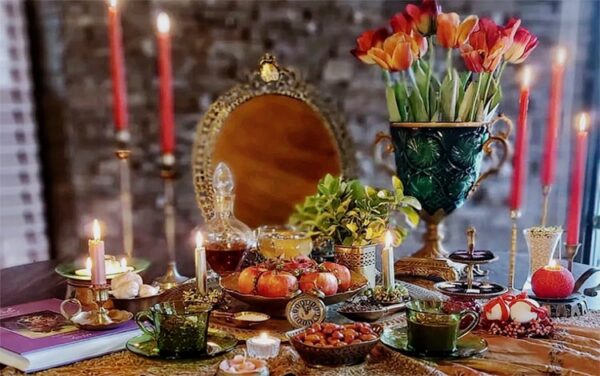
In Persian dining, the starters are called pishghazan (پیشغذا) — literally “before food.” But this translation undersells them. They are not an amuse-bouche or a polite nibble while you wait. They are the welcome. The declaration that this meal is going to take its time, and that is entirely the point.
A proper Persian table begins with a spread: multiple small dishes arriving together, shared between everyone, eaten alongside fresh flatbread (nan-e lavash or nan-e barbari), fresh herbs (sabzi khordan — basil, mint, tarragon, radishes), and perhaps a bowl of walnuts or olives. The starters are grazed through unhurriedly, conversation happens, bread is torn, sauces are scooped, before the main courses follow.
This is hospitality expressed as food. Abundance is not excess here — it is warmth.
The Essential Persian Starters
Kashke Bademjan — Smoky Aubergine Dip
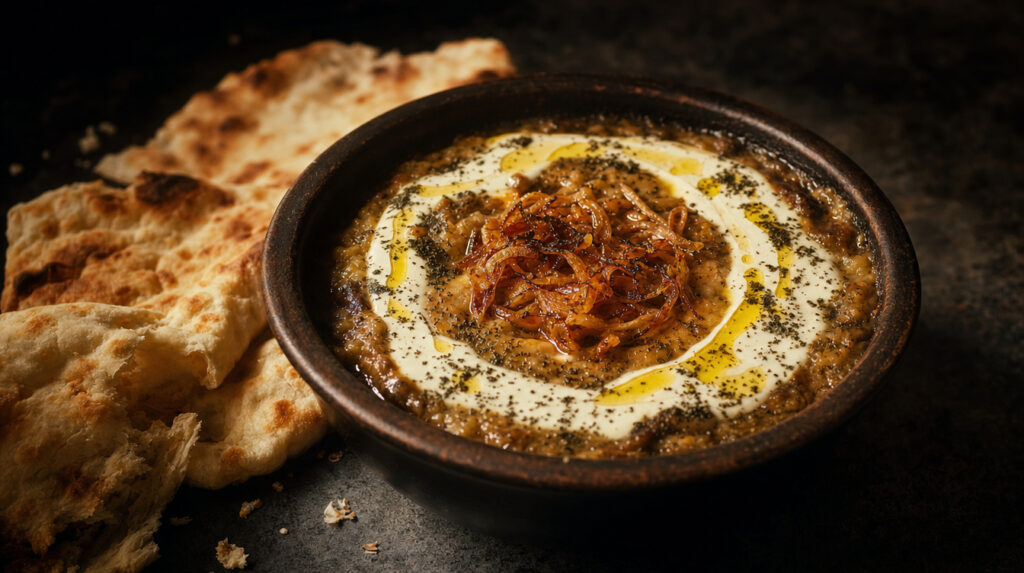
Kashke Bademjan is the starter that most guests, on first encounter, cannot stop eating. Slow-roasted aubergine, caramelised onion, sautéed garlic, and kashk — a thick fermented whey with a tangy depth unlike anything else — blended together and finished with dried mint and a drizzle of saffron oil.
It is rich, smoky, slightly tangy, deeply savoury. Scooped up with fresh flatbread, it is one of the finest things on the Shiraz menu. If you order nothing else, order this.
£6 · Order at Shiraz
Mast-o-Khiar — Persian Yogurt Dip
Mast-o-Khiar is the cool counterpoint to everything else on the starter spread. Thick yogurt, finely diced cucumber, dried mint, fresh dill, and fragrant herbs — clean, light, refreshing. Often compared to Greek tzatziki, though it predates tzatziki by several centuries and carries a different flavour logic: where tzatziki is simple and sharp, Mast-o-Khiar is herby and aromatic, finished with dried mint rather than fresh.
It works as both a starter dip and an accompaniment to mains — especially the charcoal-grilled kebabs, where the cool, tangy yogurt plays beautifully against the heat of the charcoal.
£7 · Order at Shiraz
Hummus
Persian hummus differs subtly from Lebanese hummus — lighter on the garlic, silkier in texture, sometimes finished with a drizzle of olive oil and a pinch of sumac. It is a familiar entry point for guests new to the cuisine, and a welcome presence on any shared table.
£14 · Order at Shiraz
Sabzi Khordan — Fresh Herb Platter
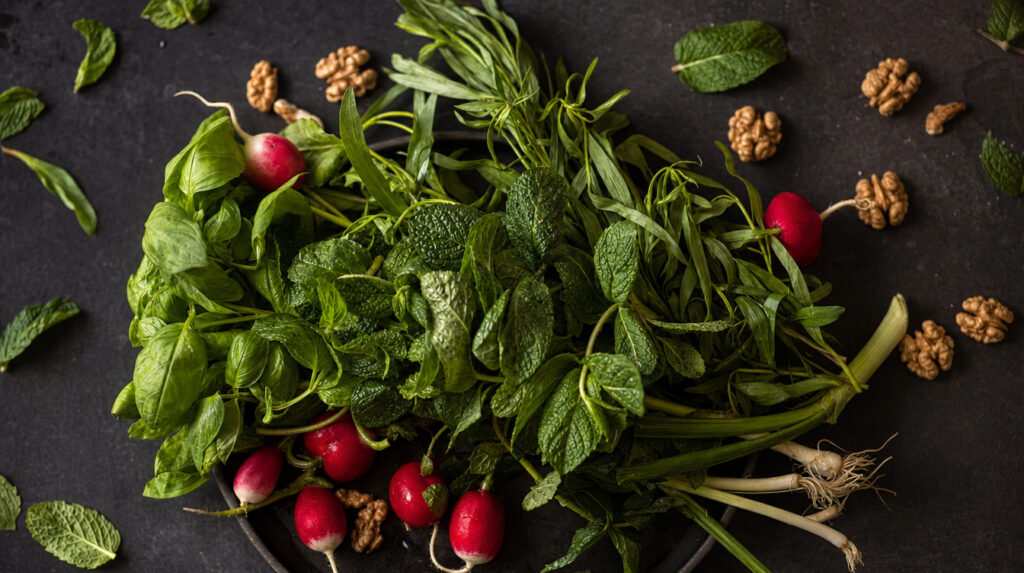
Not a dish so much as a ritual: a plate of fresh mint, basil, tarragon, radishes, spring onions and walnuts arrives at a Persian table as a matter of course. These herbs are eaten throughout the meal — tucked into bread alongside a piece of kebab, chewed between bites of stew, refreshing the palate throughout. The fresh herb platter has been part of Persian table culture for over a thousand years.
How to Build the Perfect Persian Starter Spread
For two people, we recommend: Kashke Bademjan + Mast-o-Khiar + bread. Simple, contrasting, perfect.
For four people: add Hummus or Mirza Ghassemi, the herb platter, and perhaps a bowl of olives with Persian seasoning. You will have a table that looks and feels like a proper Persian welcome — and you will still have room for the mains.
On pairing with mains: if you are ordering Fesenjan (our pomegranate and walnut stew), the clean freshness of Mast-o-Khiar as a starter works wonderfully — it lightens the palate before something so rich and complex. If you are ordering Ghormeh Sabzi (our slow-cooked herb stew), the earthy depth of Kashke Bademjan makes a natural companion.
What We Recommend at Shiraz
Our starter philosophy is simple: order more than you think you need, take your time, and let the bread do the work. The starters at Shiraz are made to be shared — they arrive and the table changes. Conversation opens up. People lean forward. The meal begins.
The best way to experience it is exactly as you would in Iran: no rushing, good company, and a table full of small bowls.